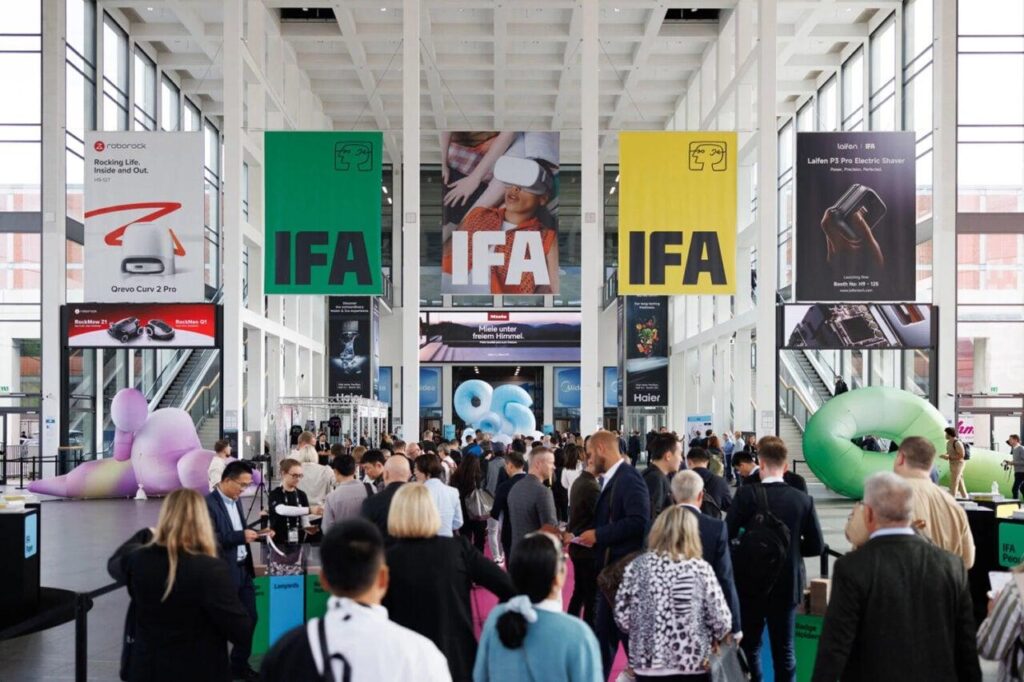
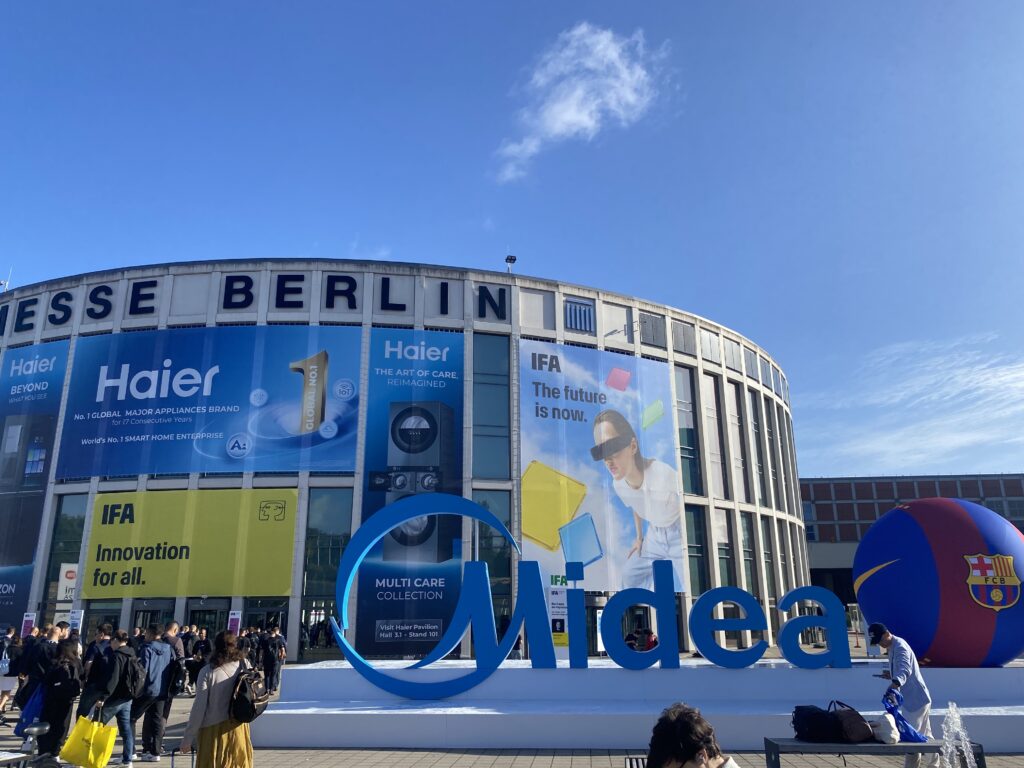
Berlin, Germany | September 4–8, 2026
This September, the Decoresmart team had the opportunity to visit IFA Berlin 2026, one of the world’s leading events for consumer electronics, home appliances, and future technologies.
For us, visiting IFA was not simply about seeing new products.
As a smart home manufacturer working with international brands, distributors, and channel partners, we believe it is important to stay close to the market — observing how consumer expectations are changing, how smart home ecosystems are evolving, and where the next opportunities may emerge.
Walking through the halls of IFA 2026, one message became very clear:
The smart home industry is moving beyond individual “smart products” toward a more connected, intelligent, and user-centered living experience.
Here are five trends that caught our attention.
1. Smart Home Is Becoming an Ecosystem, Not Just a Collection of Devices
For years, the smart home industry has introduced individual connected products — smart locks, cameras, sensors, lighting, thermostats, appliances, and many others.
At IFA 2026, however, we saw a stronger focus on how these products work together.
Consumers increasingly expect their devices to become part of a connected home ecosystem rather than operate independently.
For smart home brands and distributors, this means product selection is no longer only about specifications.
Connectivity, interoperability, and ecosystem compatibility are becoming increasingly important parts of product strategy.
For manufacturers like Decoresmart, it also means that product development needs to consider how each device fits into a broader smart living environment.
2. AI Is Moving from a Feature to an Everyday Experience
AI was visible across many categories at IFA 2026.
But what interested us most was not simply the use of the term “AI.” It was how artificial intelligence is gradually becoming part of everyday product experiences.
Smart appliances are becoming better at understanding routines, automating repetitive tasks, and responding to different user needs.
This suggests an important shift:
The future of smart home products will not be defined by how many technologies they contain, but by how naturally those technologies improve everyday life.
For product developers, this is an important reminder.
Technology should not make a product more complicated.
The best smart home products use technology to make everyday actions simpler.
3. Convenience Still Matters — but Simplicity Matters Even More
Another observation from IFA was the continued emphasis on convenience.
Touchless interaction, automation, remote control, intelligent sensing, and connected management are appearing across more household categories.
However, adding more functions does not automatically create a better product.
Consumers still need products that are intuitive, reliable, and easy to use.
This is particularly relevant in categories such as smart locks and smart security.
A smart lock may support fingerprints, passwords, cards, mobile apps, remote management, and other features — but ultimately, the user expects one simple result:
Safe and convenient access to their home.
That principle should remain at the center of smart home product development.
4. Smart Living Is Expanding Beyond Traditional Smart Home Categories
One of the most interesting developments we observed is how broad the definition of “smart home” has become.
Connected technology is moving beyond traditional categories such as locks, cameras, lighting, and thermostats.
Kitchen appliances, cleaning products, air-quality solutions, energy management systems, garden equipment, and other everyday household products are becoming increasingly intelligent and connected.
This reflects a much larger opportunity for the industry.
Smart home is gradually becoming smart living.
For brands and distributors, this creates opportunities to think beyond individual products and build broader product portfolios around real household scenarios.
Instead of asking:
“What smart product should we sell next?”
A better question may be:
“What part of everyday life can we make simpler, safer, or more convenient?”
5. Good Smart Home Products Still Need to Solve Real Problems
IFA is full of impressive technology.
But after seeing so many new concepts and products, our biggest takeaway was actually very simple:
Innovation only creates value when it solves a real problem.
Consumers may be attracted by new technology, but long-term product success still depends on fundamentals:
- Is it useful?
- Is it reliable?
- Is it easy to install and use?
- Does it integrate naturally into everyday life?
- Can the brand support the product after it reaches the market?
For distributors and smart home brands, these questions are especially important when selecting new products and manufacturing partners.
What IFA 2026 Means for Decoresmart
Our visit to Berlin gave us new ideas, but it also reinforced the direction we have been building at Decoresmart.
We believe the future of smart home manufacturing is not simply about producing more devices.
It is about understanding markets, identifying real user needs, developing reliable products, and helping partners build product ranges that can succeed in their local markets.
Starting with smart locks and smart security, Decoresmart is continuing to explore a broader range of smart home solutions designed around security, convenience, connectivity, and everyday usability.
For our OEM and ODM partners, we also want to bring more than manufacturing capacity to the table.
We want to bring product development, market insight, flexible customization, and long-term support into the partnership.
Because ultimately, a successful smart home product is not the one with the longest specification sheet.
It is the one that customers understand, trust, use — and want to keep using.
Looking Ahead
IFA Berlin 2026 reminded us how quickly the smart home industry continues to evolve.
AI, connected ecosystems, intelligent automation, energy efficiency, and user-centered design are gradually reshaping what consumers expect from their homes.
We were glad to be in Berlin to experience these developments firsthand, exchange ideas, and see where the industry is heading.
And we are even more excited to bring these insights back into our own product development and future cooperation with our global partners.
The future of smart living is not about making everything “smart.”
It is about using technology to make everyday living better.
— Decoresmart Team